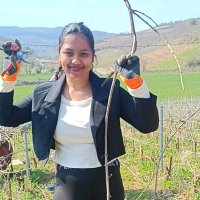
There is a French expression I learnt during my time at Lycée Lucie Aubrac, Agro Bio Campus Davayé that I have come to understand rather differently since leaving France: transmettre un savoir — to pass knowledge on.
For me, those words will always have a face.
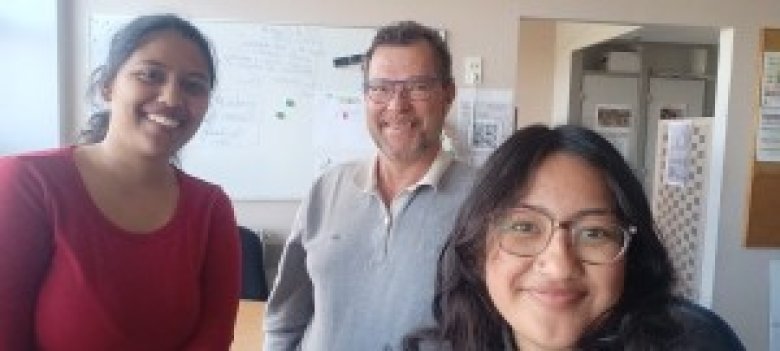
Patrick Lenadan.
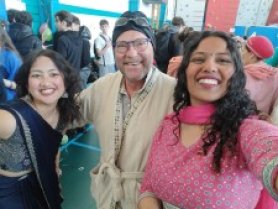
Before every class, every walk through the vineyard, every conversation about vines and wine, there was something about Patrick that was impossible to miss: he genuinely loved what he did. Not in the distant, polished way in which one sometimes speaks of loving one’s profession, but with the sort of enthusiasm that makes you feel that the subject itself is alive.
And perhaps that is what makes a good teacher.
He could speak about a vine for several minutes and somehow make you forget that you were standing in a vineyard in the middle of a lesson. He became almost animated when explaining a pruning system, a fermentation process or the reasoning behind a particular vineyard practice. He answered our questions with extraordinary patience—even the questions that probably deserved a much simpler answer—and never made us feel that we were asking too much.
i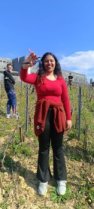
He opened the doors of his classes to us, gave us his time generously and, somewhere along the way, turned lessons into conversations. We arrived to learn about viticulture; we often left having learnt something about curiosity itself.
Through Patrick's classes, I began to understand the extraordinary precision hidden behind what, from a distance, can look like a very simple act: growing grapes.
We studied terroir—not merely as soil, but as the intricate relationship between soil, climate, topography, exposure and grape variety that gives a place its particular identity. We learnt about rootstocks such as SO4 and 3309 Couderc, about Guyot pruning and the delicate balance between vegetative growth and yield, and about canopy management, where sunlight, aeration and grape quality have to be considered almost simultaneously.
.
I learnt that a vineyard is not simply a field of vines.
It is a system that demands observation.
You watch the plant. You watch the soil. You watch the weather. You watch the development of the grapes. And then you make decisions—sometimes small, sometimes consequential—based on what the vineyard is telling you.
That idea stayed with me.
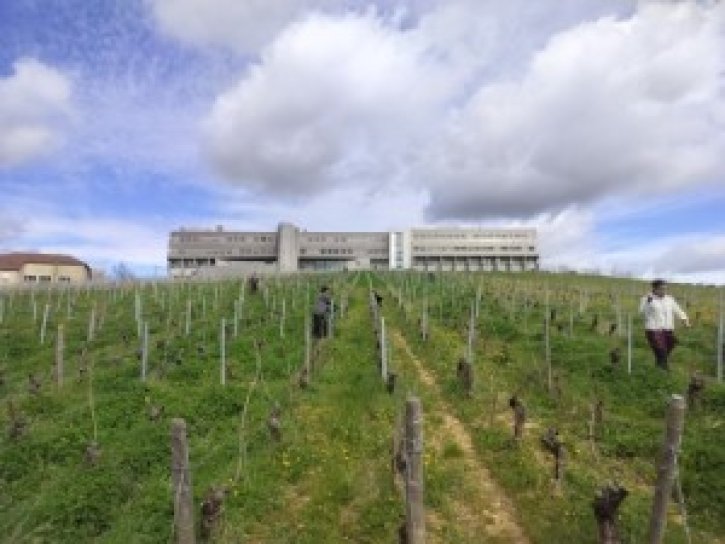
We spent hours among the vines, pruning, tying, observing and learning. There was something wonderfully humbling about discovering that practices that may appear routine to someone who has grown up around vineyards are, in fact, the accumulation of generations of knowledge. Even the smallest decision seemed to have a reason behind it.
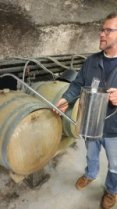
And then we followed the grapes beyond the vineyard, into the chai.
There, the vineyard seemed to acquire a second language.
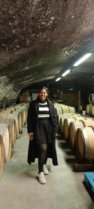
We followed the different stages of winemaking—from pressing and settling to fermentation, malolactic fermentation, ageing, blending and finally bottling. We saw pneumatic pressing, tanks and barrels; we learnt about indigenous yeasts and watched how seemingly invisible transformations could eventually become something as tangible as a glass of wine.
And then came the tasting.
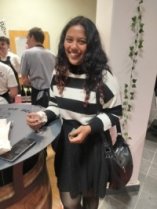
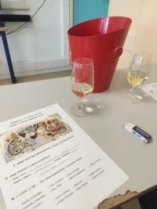
I had once thought that wine tasting was largely about knowing the right words to say. Patrick taught us to pay attention instead: to the aromas, the texture, the acidity, the balance, the length, the little differences that emerge when you stop trying to sound knowledgeable and simply learn to observe.
That lesson extended far beyond wine.
les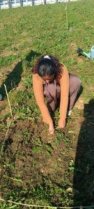
Coming from India, where vineyards certainly exist but occupy a very different place in the agricultural landscape, discovering an entire educational world devoted to viticulture and œnologie was fascinating.
But what stayed with me was not the technology.
It was the philosophy.
There was a remarkable savoir-faire—a knowledge that is not merely written in textbooks, but acquired through observation, repetition, experience and respect for the craft. Decisions in the vineyard and in the cellar seemed to be guided by a conversation between science and tradition: precision without losing patience, innovation without forgetting what came before.
Perhaps that is one of the most beautiful things about agriculture.
It asks you to think about time differently.
You can prune today, but the consequences may reveal themselves months later. You can make a decision in the vineyard that will eventually find its way into someone's glass. You learn that nature does not particularly care about our impatience.
And Patrick seemed to understand this instinctively.
He never made knowledge feel like something that had to be guarded. He made it feel like something meant to be transmitted.
Transmettre un savoir.
Perhaps that is why those words have stayed with me.
Because there are teachers from whom you remember facts, and there are teachers from whom you inherit a way of looking at the world.
I may one day forget the exact characteristics of SO4 or 3309 Couderc. I may forget the ideal temperature for a particular fermentation or the finer details of a pruning system.
But I don't think I will forget the way Patrick taught us to look at a vine.
With curiosity.
With patience.
And with respect for everything that came before us.
They say that a wine bears the imprint of its terroir.
Perhaps students do too.
We carry little traces of the people who taught us—sometimes in the things we know, but more often in the way we come to see things.
So, merci, Patrick.
For the vines, the vineyards, the wines and the science behind them.
But above all, thank you for showing me what it really means to transmettre un savoir.
Perhaps, after all, that is what remains.



Commentaires